So you’ve heard Tenerife throws the second biggest carnival on the planet after Rio.
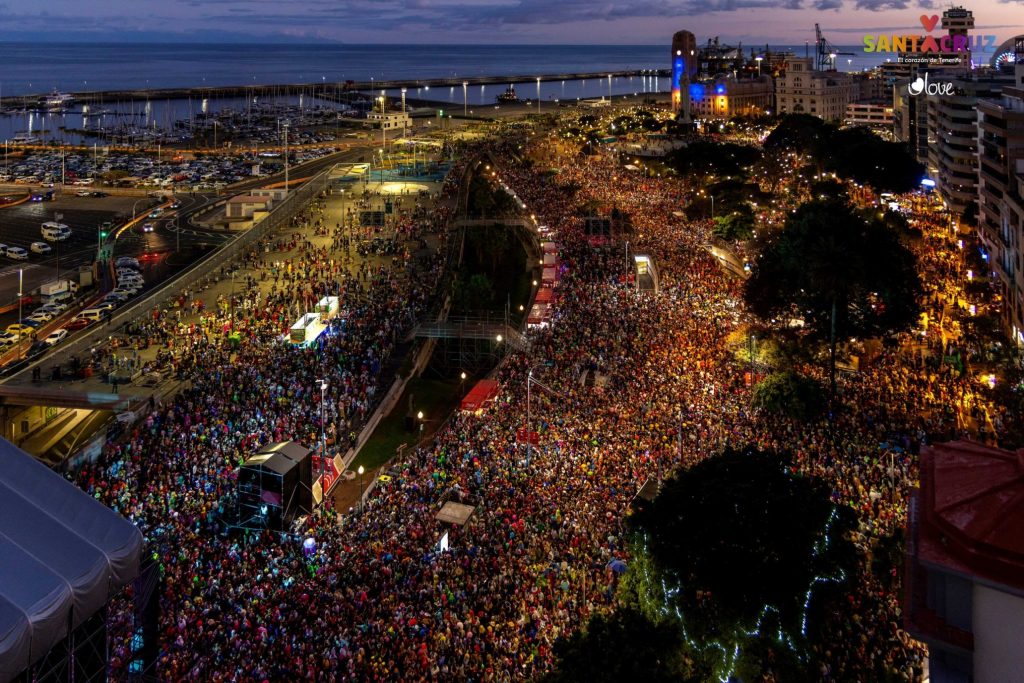
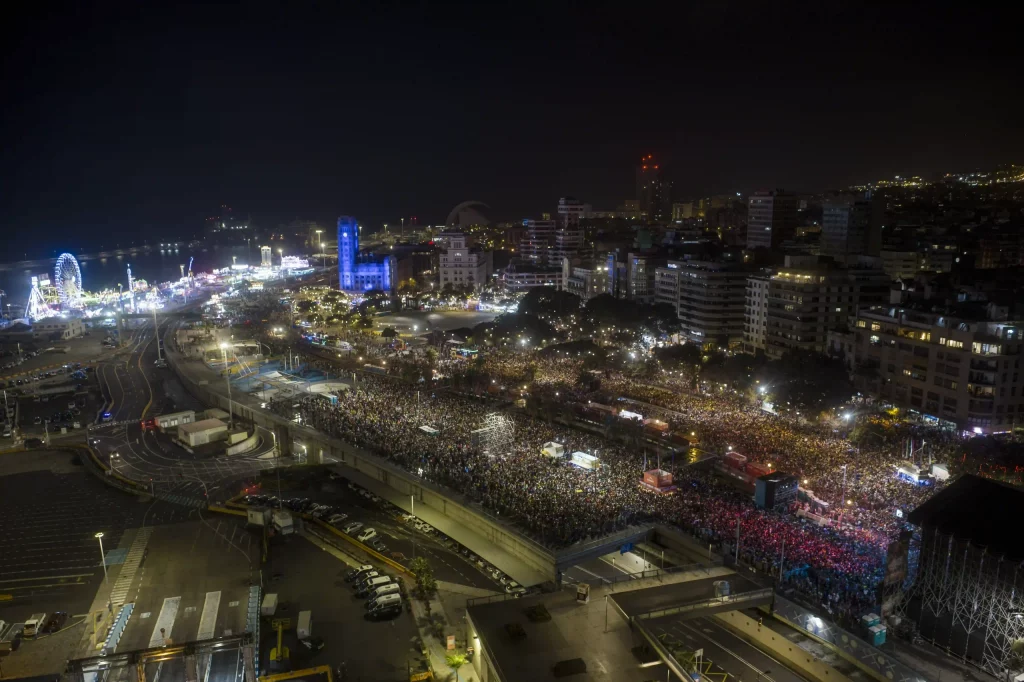
That’s not just tourism marketing—250,000+ people packed Plaza de España in 1987 to watch Celia Cruz perform, setting a world record that stood for decades. In 2019, Piñata Saturday pulled 400,000 revelers into the streets. This isn’t some curated tourist experience. This is a Canarian institution where 999 out of 1,000 people actually wear costumes, the parties genuinely run until sunrise, and the whole thing costs a fraction of what you’d spend in Rio.
The 2026 edition runs January 16 through February 22 with the theme “Ritmos Latinos” (Latin Rhythms), and yes, it’s absolutely worth building a trip around. 🎭
📋 Quick Navigation
- Theme & Vibe – Latin Rhythms 2026
- Complete Schedule – All 3 phases (Jan 16 – Feb 22)
- PHASE 1: Contest Season (January 16-31)
- PHASE 2: The Galas (February 2-11)
- PHASE 3: Street Carnival Week (February 13-22)
This is what most travelers are here for
- Cultural Context – Murgas, comparsas, and traditions
- Practical Info – Tickets, transportation, and budgets
- Where to Stay – Nests Hostels locations + Nest Pass discounts
- Party Zones – Where everything happens in Santa Cruz
- 🐟 Burial of Sardine – The wildest carnival finale
- Carnival de noche – Carnival party all night long
- Budget Guide – How to do 4 days for under €250
- The only thing that make it different from Rio de Janeiro Carnival
- Others Carnivals on Tenerife
What “Latin Rhythms” Actually Means for Your Experience
The 2026 theme won a public vote with 34% support, beating out options like “Hollywood” and “Asian Pop Culture.” This year’s carnival celebrates samba, salsa, merengue, bachata, and reggaeton—expect the music, costumes, floats, and overall energy to channel Latin American vibrancy.
The official poster features Celia Cruz herself, a nod to her legendary 1987 performance. The artistic team leading everything is described as the youngest in carnival history, and they’ve already confirmed international artists are booked (names still under wraps as of January 2026).
Last year’s theme was “Secrets of Africa,” which brought Senegalese drum traditions and Nigerian artistic influences. The shift to Latin Rhythms means more familiar dance music for most visitors—if you’ve ever been to a Latin night at any club anywhere, you’ll feel right at home when the comparsas start their batucada drumming at 2 AM. 🥁

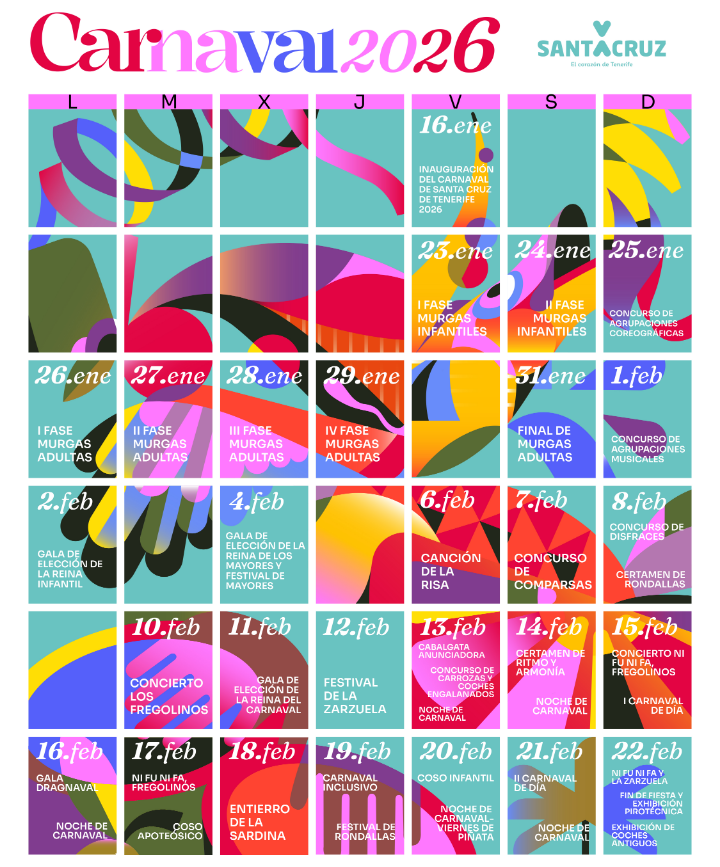
The Complete Schedule Breakdown (So You Can Actually Plan) 📅
Here’s where most guides fail you—they give you vague “mid-February” dates. Not helpful when you’re booking flights. The carnival spans 38 days total, but the energy levels vary dramatically depending on when you show up.
🎪 PHASE 1: Contest Season (January 16-31)
The first phase is all about the competitions—if you’re into the authentic local scene and want to see where carnival rivalries really heat up, this is your time.
| Date | Event | Why It Matters |
|---|---|---|
| Jan 16-30 | Murgas Elimination Rounds | Watch neighborhood singing groups battle it out at Recinto Ferial—sharp satire, intense local pride, fewer tourists |
| Jan 31 (Fri) | Murgas Adult Finals | THE big deal for locals, treated like a sports championship—tickets sell out in minutes, atmosphere is electric |
👑 PHASE 2: The Galas (February 2-11)
This is when the spectacle kicks into high gear—massive costumes, national TV broadcasts, and the events everyone talks about.
| Date | Event | Why It Matters |
|---|---|---|
| Feb 2 (Sun) | Children’s Queen Gala | Young contestants in miniature fantasy costumes—family-friendly and genuinely adorable |
| Feb 4 (Tue) | Senior Queen Gala | Celebrates Tenerife’s elder queens with dignity and style—a beautiful tradition |
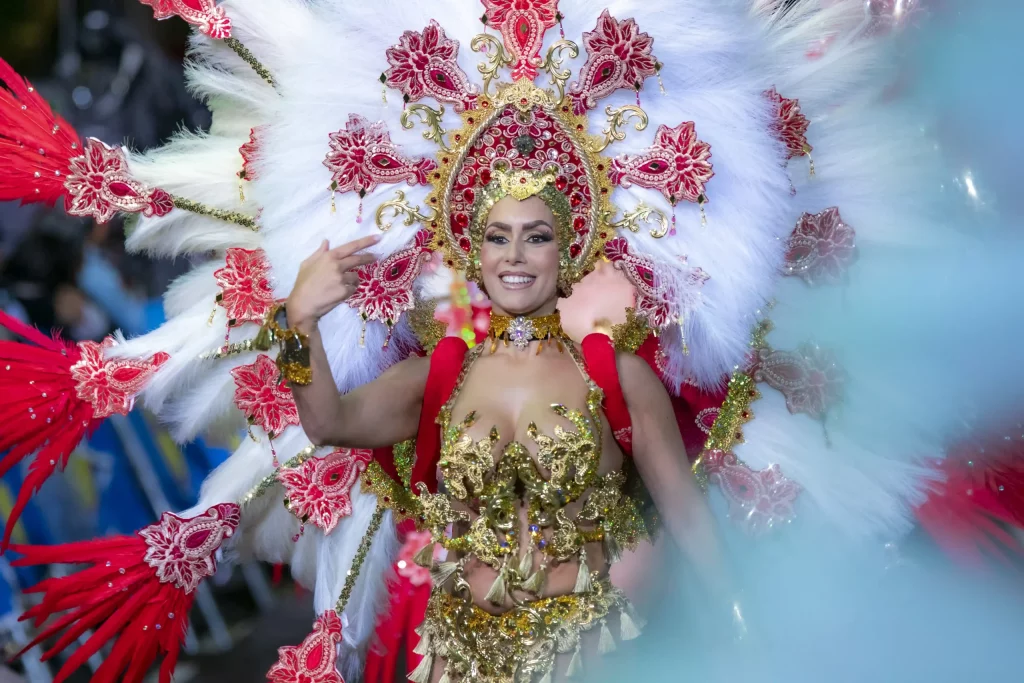
| Feb 7 (Fri) | Comparsas Contest | Brazilian-style dance troupes compete with synchronized choreography and thundering drums |
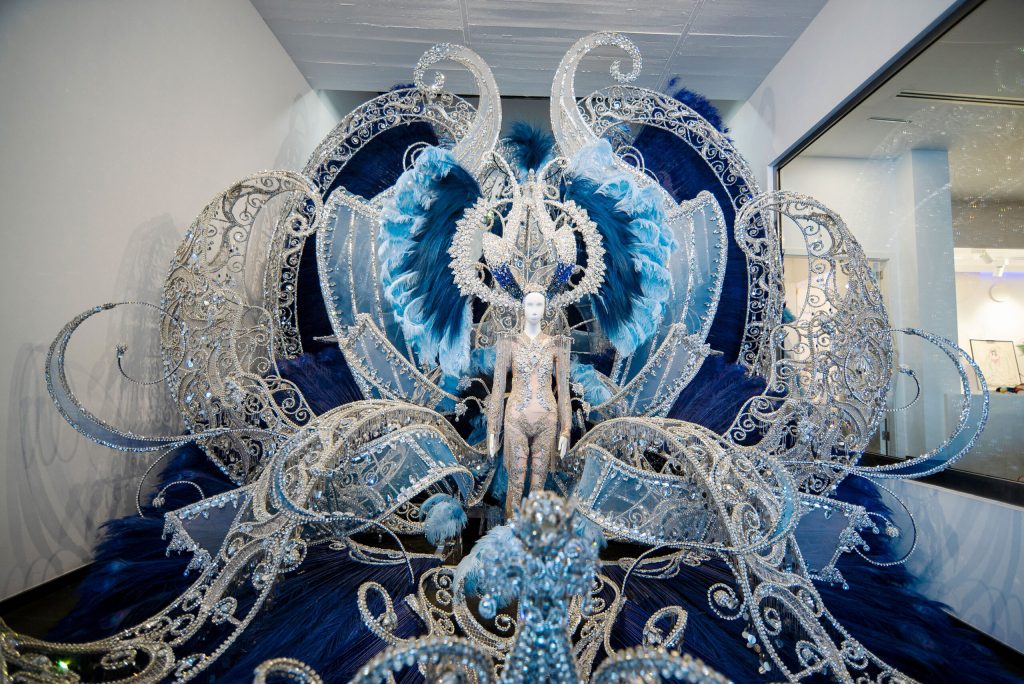
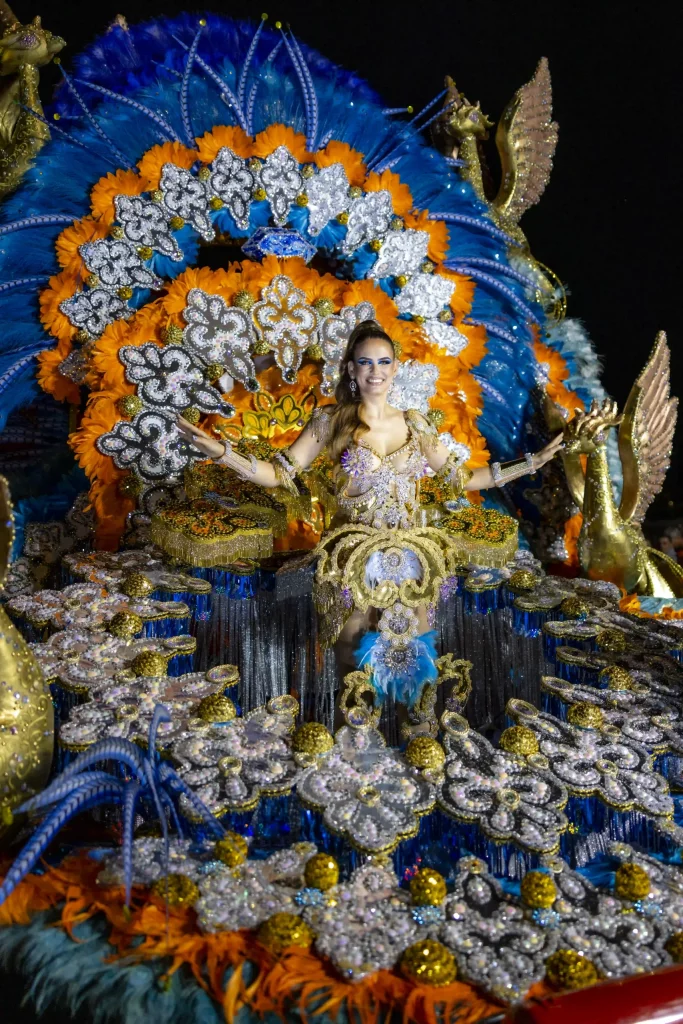
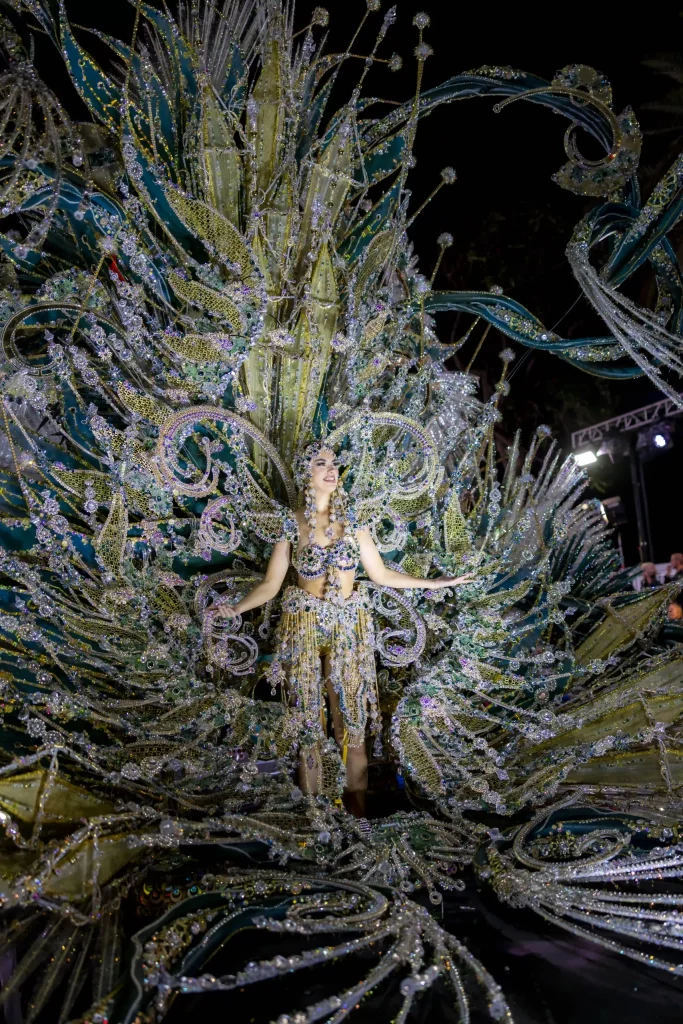
| Feb 11 (Tue) | Gran Gala de Elección de la Reina | The main event—candidates in 80-170kg costumes reaching 5+ meters tall, broadcast nationally and internationally |
The Queen’s gala is the spectacle everyone talks about. These aren’t costumes—they’re mobile architectural installations that require engineering degrees to construct and wheels to move. The gala broadcasts across Spain and via satellite worldwide. 📡
🎉 PHASE 3: Street Carnival Week (February 13-22)
This is what most travelers are here for—when Santa Cruz transforms into one massive street party.
| Date | Event | Why It Matters |
|---|---|---|
| Feb 13 (Fri) | Cabalgata Anunciadora (Opening Parade) | Street carnival officially begins—more locals, fewer tourists, excellent for authentic vibes |
| Feb 14 (Sat) | Festival de Ritmo y Armonía + Carnaval de Noche | Valentine’s Day parade featuring all comparsas, then Latin legends Tito Nieves, Milly Quezada, Elvis Crespo, and Grupo Ráfaga perform 🎤 |
| Feb 15 (Sun) | First Carnaval de Día | Daytime party—great for families and those who prefer chaos with sunlight ☀️ |
| Feb 16 (Mon) | Gala Dragnaval + Carnaval de Noche | Drag show at Plaza de la Candelaria, then the busiest night of the entire carnival |
| Feb 17 (Tue) | Coso Apoteosis | THE main parade—The Queen and her court on floats, dozens of comparsas, murgas, confetti explosions—this is the money shot 🎊 |
| Feb 18 (Wed) | Entierro de la Sardina | Burial of the Sardine—carnival’s wildest, weirdest finale (more below!) |
| Feb 20 (Fri) | Coso Infantil + Carnaval de Noche | Children’s parade by day, party continues by night |
| Feb 21-22 | Piñata Weekend | Second Daytime Carnival Saturday, then grand fireworks finale Sunday 🎆 |

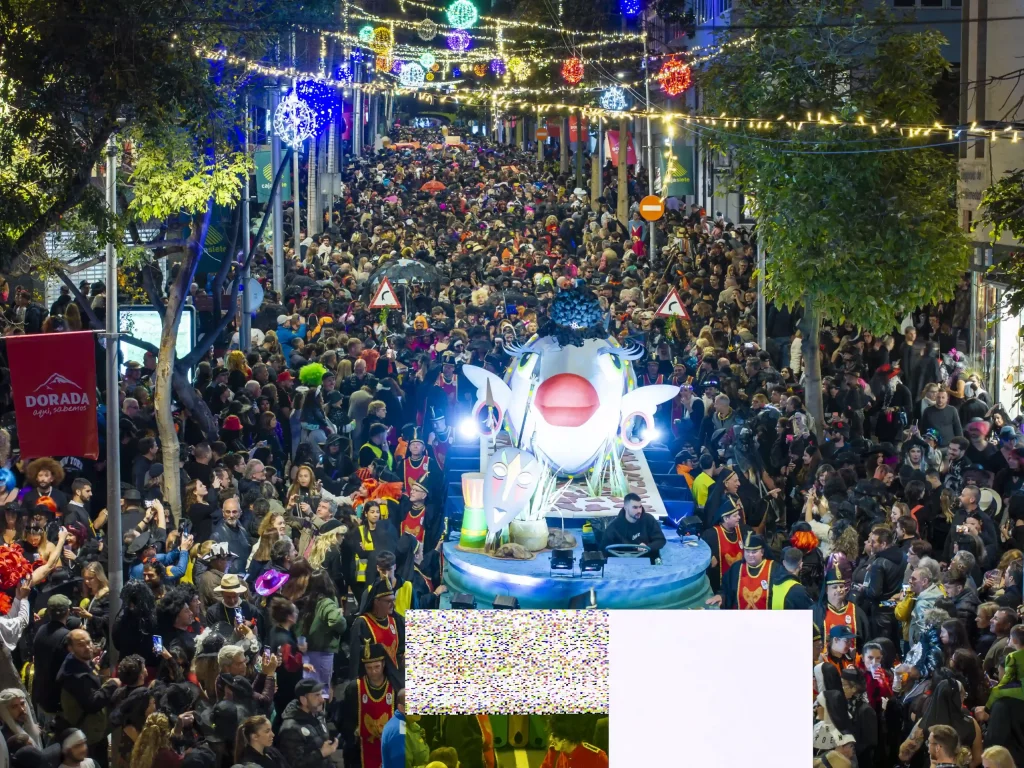
🐟 The Entierro de la Sardina: Carnival’s Wildest Finale
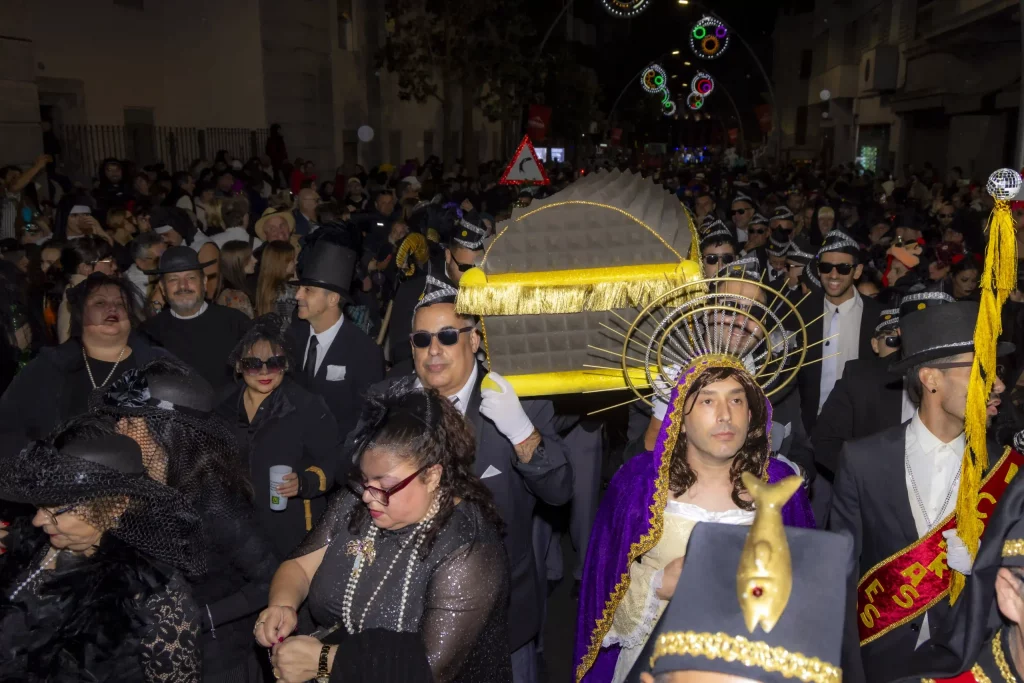
February 18 brings one of carnival’s most bizarre, theatrical, and unforgettable traditions—the Burial of the Sardine (Entierro de la Sardina). This isn’t just another parade. It’s a mock funeral procession for a giant papier-mâché sardine that marks the symbolic death of carnival itself.
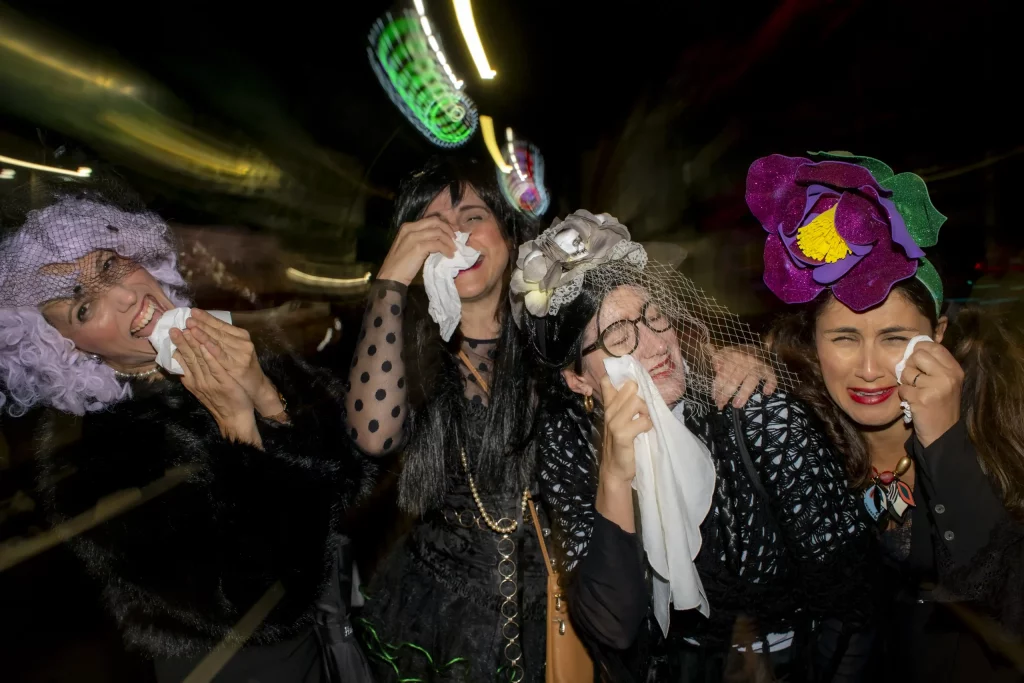
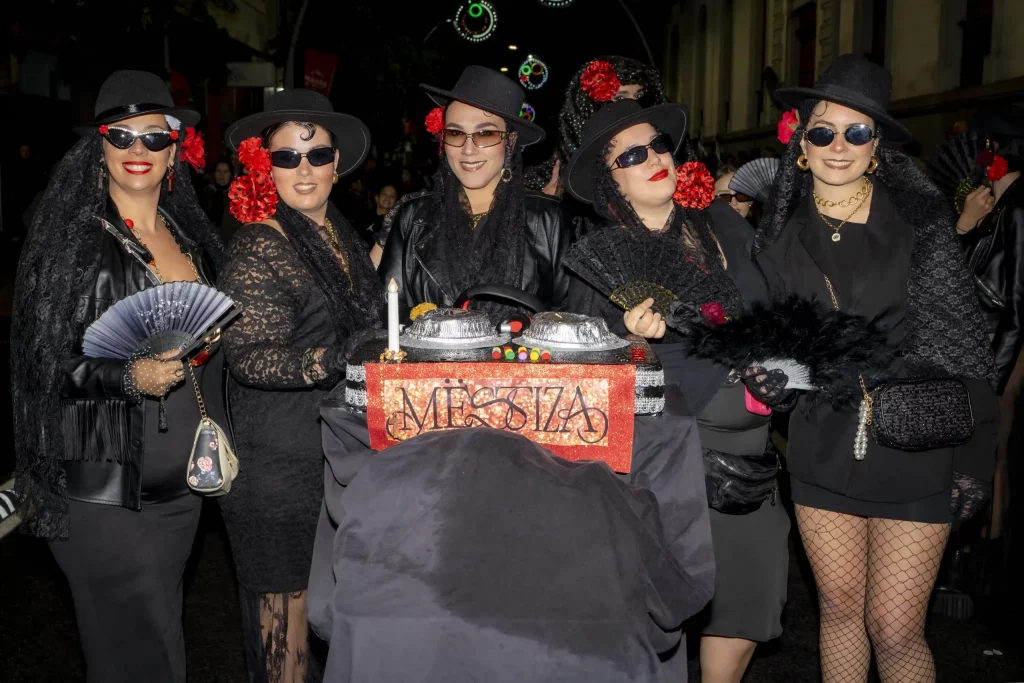
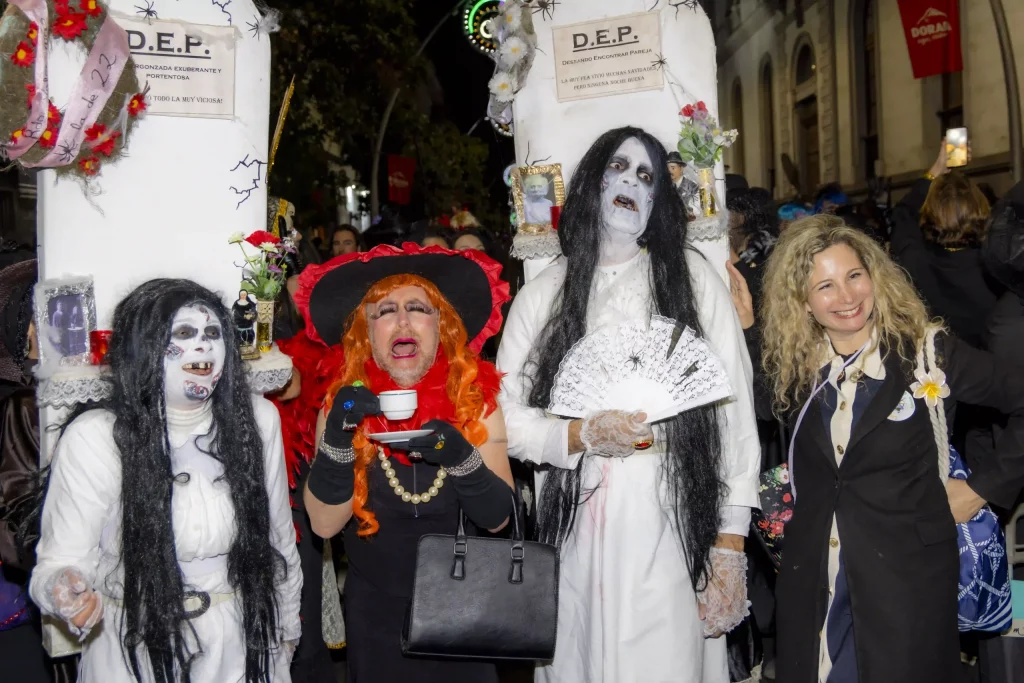
Picture this: thousands of people dressed as grieving widows—traditionally men in drag, complete with black veils, dramatic makeup, and over-the-top mourning attire—wailing theatrically as they follow a massive sardine float through the streets. The atmosphere is part funeral, part comedy show, all carnival chaos. 😭
The procession winds through central Santa Cruz before reaching Avenida Marítima, where the sardine meets its fiery fate. The giant fish is set ablaze in a ritual that symbolizes purging carnival’s excesses and making way for Lent. Locals call themselves “chicharreros” (after the chicharro fish), making this ceremony deeply connected to Tenerife’s fishing heritage and identity.
Why You Can’t Miss It:
- It’s peak carnival absurdity—nowhere else will you see mass grief for a fake fish
- The crowd participation is off the charts—everyone commits to the bit
- Historically significant: organized since 1972 by carnival legend Enrique González Bethencourt (founder of NiFú-NiFá)
- The spectacle of the burning sardine against the night sky is genuinely stunning
- It represents carnival’s spirit of transgression and satire in the most Tenerife way possible
💡 Pro Tips:
Wear black to join the widows. Bring tissues for fake crying. The more theatrical your grief, the better. This is your chance to fully commit to the carnival madness one last time before everything ends.
📹 Watch it: Search “Entierro de la Sardina Tenerife” on YouTube to see the chaos in action.
The tradition dates back centuries across Spain—even Goya painted it in 1812—but Tenerife’s version brings extra intensity because, well, it’s carnival. After weeks of non-stop partying, the Burial of the Sardine gives everyone permission to be gloriously ridiculous one more time before reality returns.


Getting There from Wherever You’re Staying 🚌
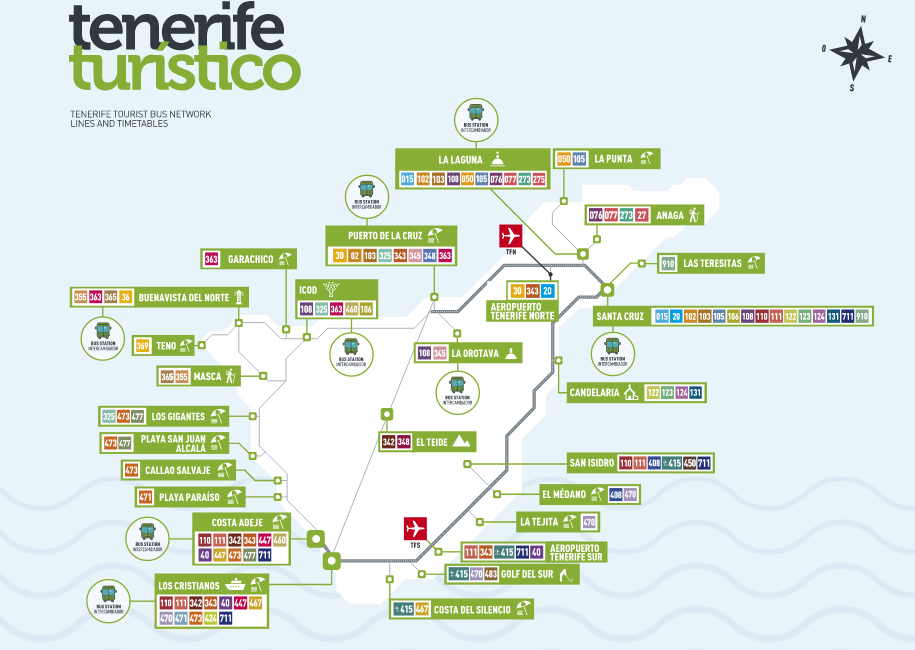
Santa Cruz de Tenerife is on the island’s northeast coast. If you’re in the touristy south (Costa Adeje, Playa de las Américas), you’re looking at 78-83 km and need to plan transportation carefully.
From South Tenerife (Costa Adeje/Las Américas), TITSA bus routes 110 (express, ~55 min) and 111 (with stops, ~75-90 min) run every 20-30 minutes during the day. Night service 711 runs hourly from 10 PM to 5:30 AM. Single fare is €9-10 without a card, or €6-7 with a TenMas/Bono card—definitely get the card if you’re making multiple trips.
During carnival, TITSA adds over 4,200 extra journeys and 300,000 additional seats. The Santa Cruz bus interchange operates 24 hours on Fridays, Saturdays, and Carnival Monday. Other nights it closes at 3 AM.
From North Tenerife (Puerto de la Cruz), you’re only 35-40 km away. Bus 100 (express, ~35 min) or 102 (with stops, ~50-55 min) both run frequently and get reinforced during carnival.
🏠 Where to Stay: Nests Hostels Has You Covered
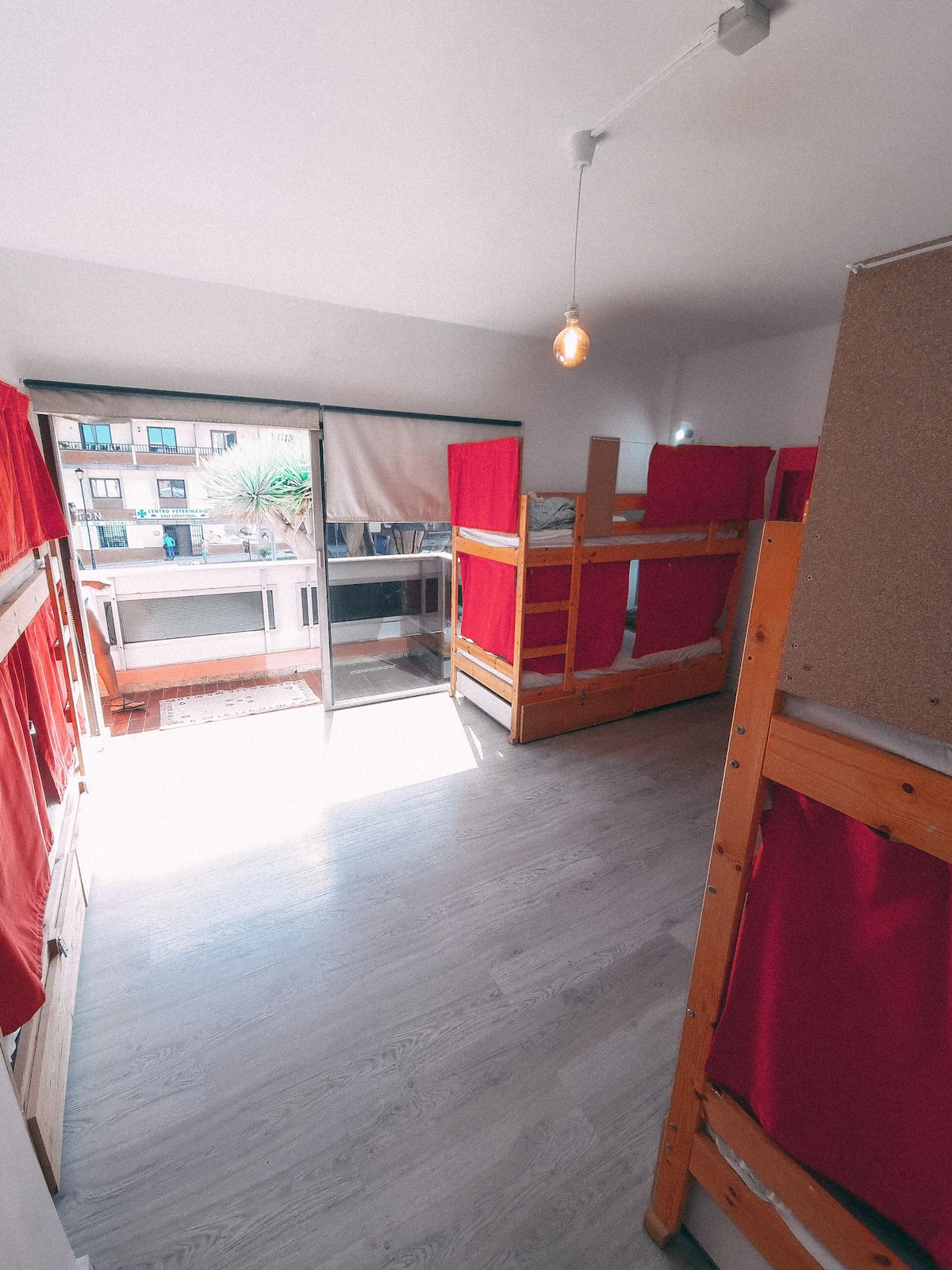
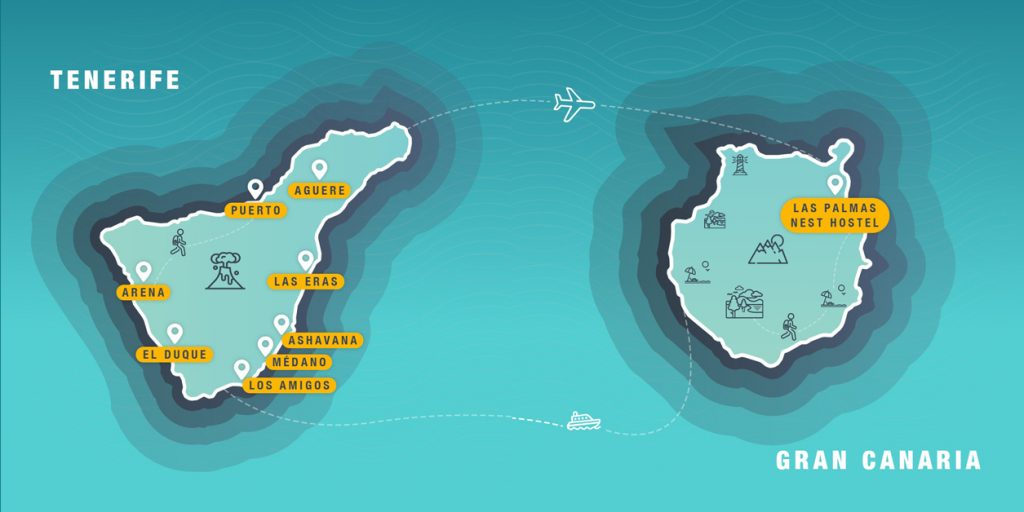
The secret move: Stay in La Laguna at Aguere Nest instead of Santa Cruz. This UNESCO World Heritage town sits just 9-10 km from the carnival action, connected by Tram Line 1 which runs every 5-10 minutes during peak times and operates 24 hours on carnival weekends. Accommodation is more available and you’ll experience authentic Canarian life.
Staying in Puerto de la Cruz? Puerto Nest is perfectly positioned—and Puerto runs its own carnival concurrently (February 1-28), so you can experience both!
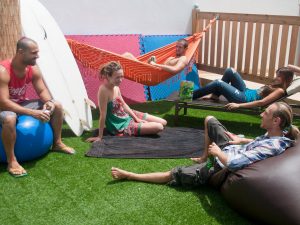
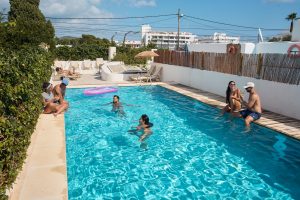
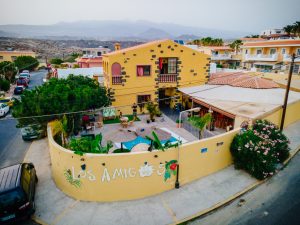
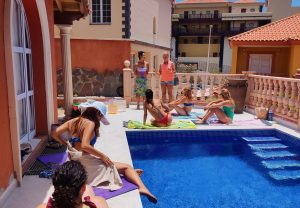
All our Tenerife locations (El Médano Nest, Ashavana Nest, Arena Nest, Duque Nest, Las Eras Nest, Los Amigos Nest) are organizing group trips to Santa Cruz during carnival week—join fellow travelers for the ultimate carnival experience!


🎟️ Save with Nest Pass
Beat the carnival price surge with Nest Pass—our special rate that locks in the same price even during peak carnival dates:
- 20% off for weekly stays its mean 7 days 203€
- 30% off for monthly stays its mean 750€ 28 days
While other accommodations triple their prices during carnival, Nest Pass keeps you at regular rates. Book early and actually afford to party! 💪
Important: Do not drive. Parking is essentially impossible during carnival, and most of central Santa Cruz closes to traffic for parades. The municipality literally begs visitors to use public transport.
🎊 Where the Actual Parties Happen
Santa Cruz transforms into distinct zones during carnival:
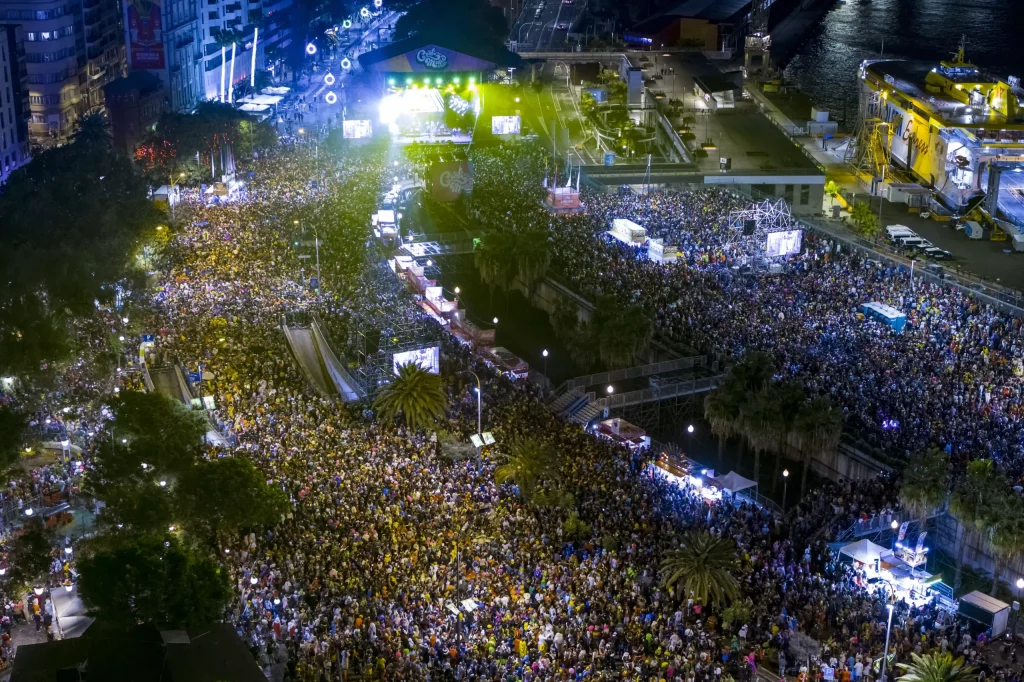
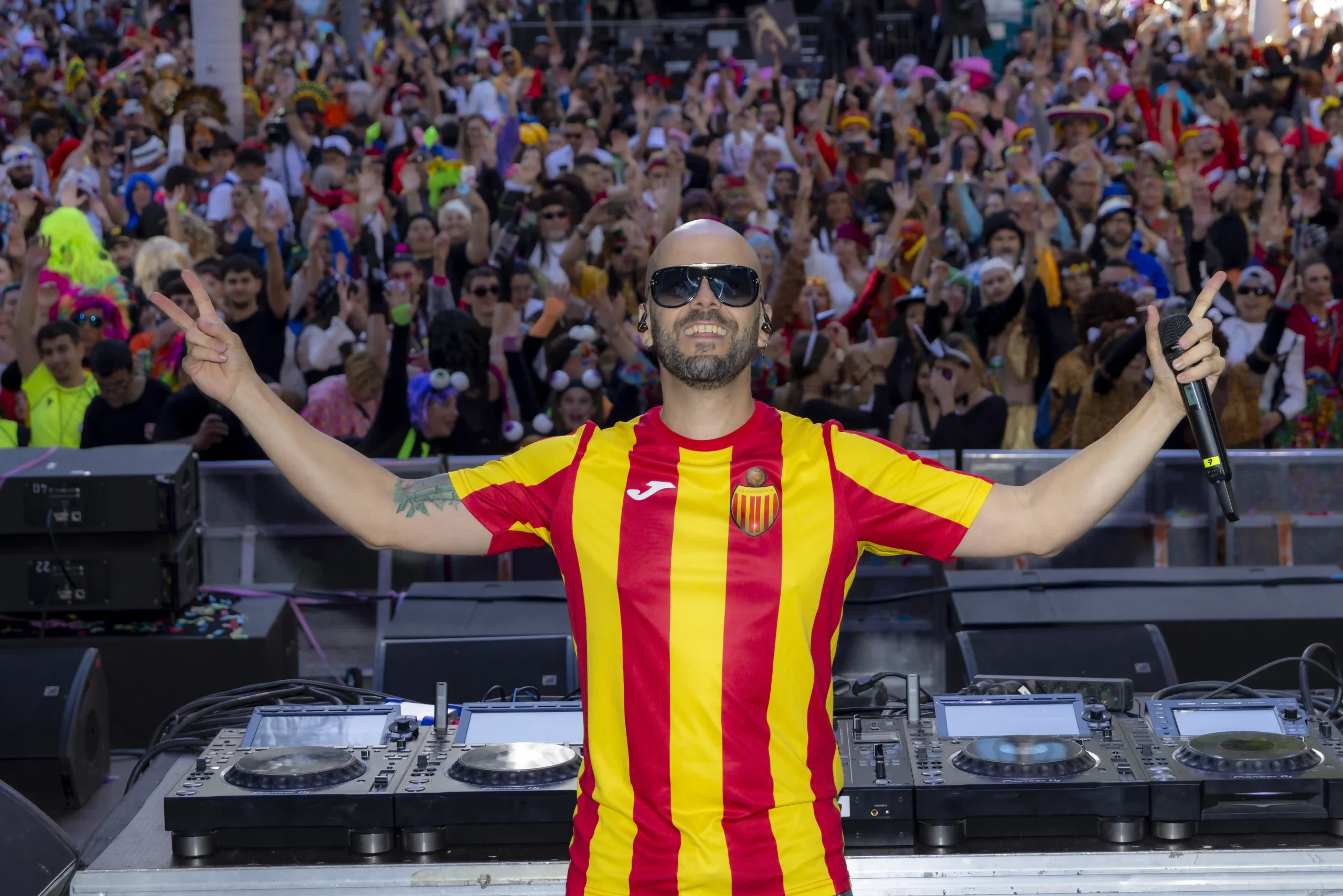
Plaza de España and Plaza de la Candelaria form the main hub—stages, food stalls, DJs spinning until dawn. This is where you’ll find the densest crowds on peak nights.
Avenida de Anaga and Avenida Marítima (the seafront) host the parade routes. The Coso Apoteosis rolls down here on February 17, and this is where you want to position yourself for maximum spectacle.
The Cuadrilátero (carnival quadrilateral) is the designated street party zone in central Santa Cruz. Within this area, Calle San José features “coches decorados”—cars converted into mobile sound systems blasting music through the night.
Recinto Ferial (Trade Fair Center) on Avenida de la Constitución hosts all the formal galas and competitions. It’s right on the waterfront near the stunning Auditorio de Tenerife.
Everything’s walkable once you’re in central Santa Cruz. Plaza de España to Recinto Ferial takes about 15 minutes on foot. The bus interchange is 10-15 minutes from the main action.



What to Actually Expect at Carnaval de Noche 🌙
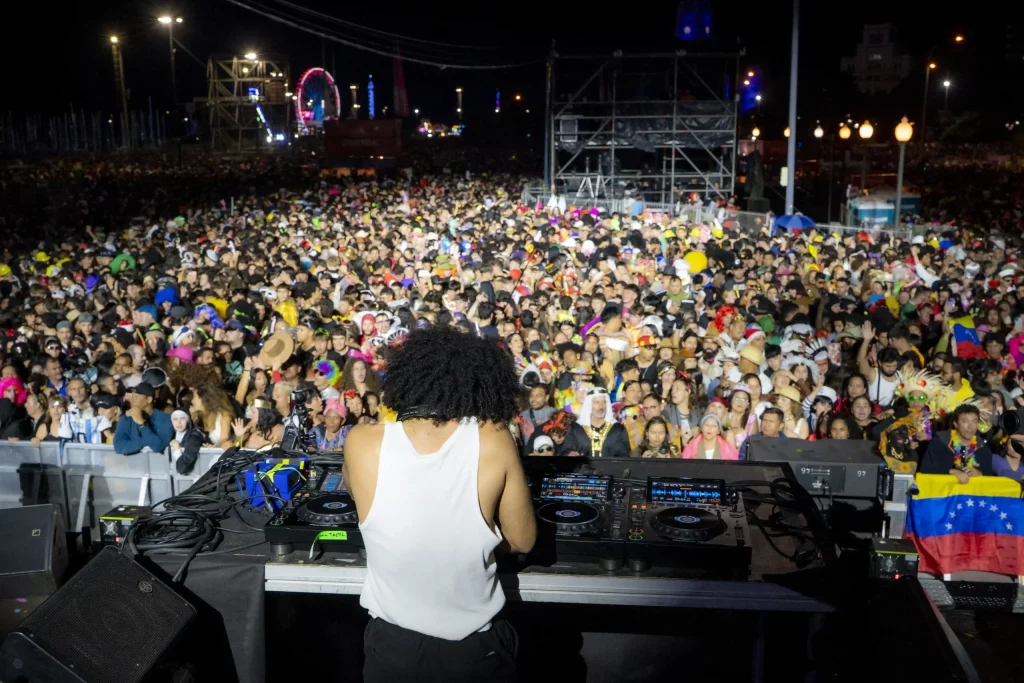
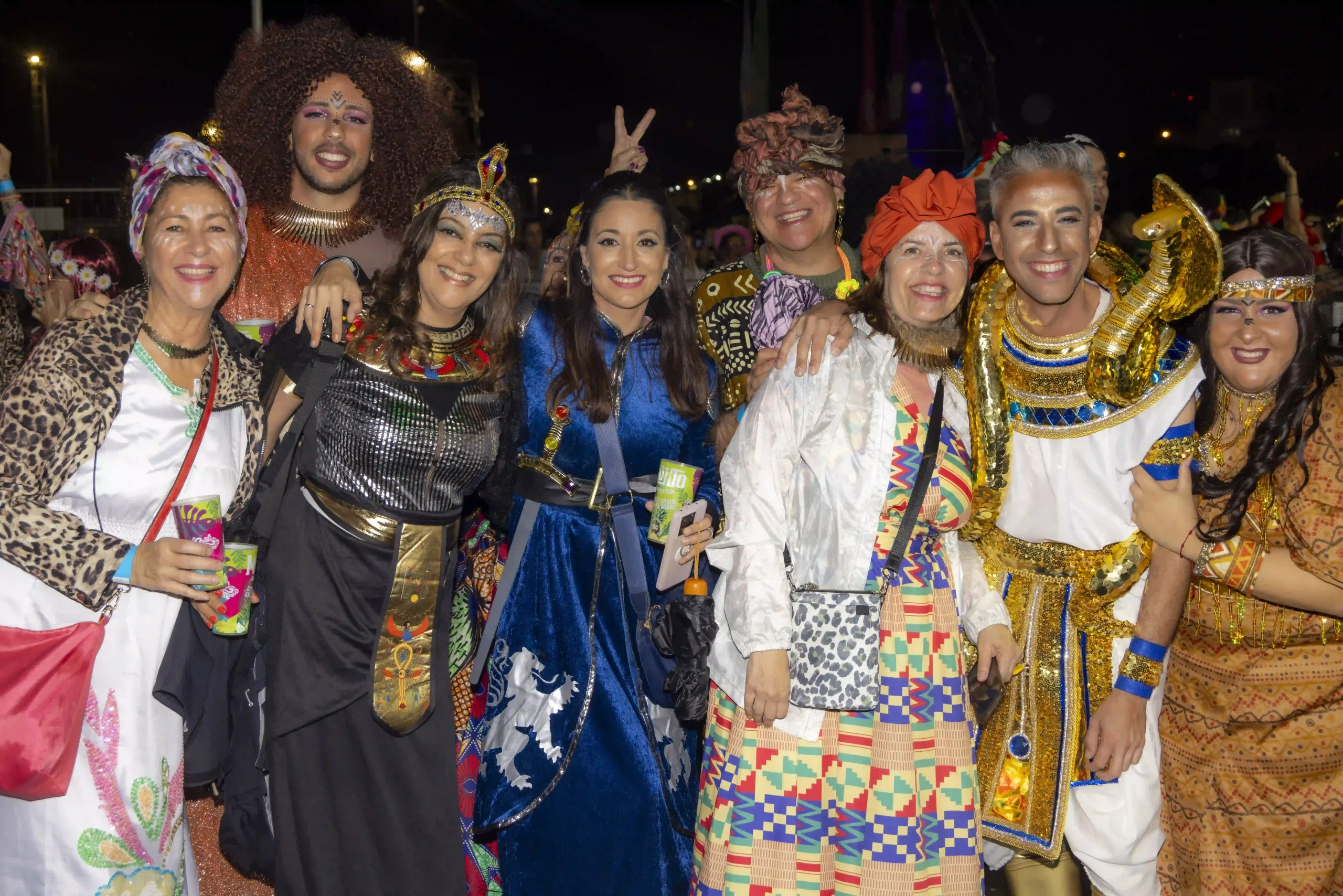
The night parties don’t really kick off until after midnight. By 2 AM, you’ll be shoulder-to-shoulder with 200,000+ people on peak nights (Carnival Monday is traditionally the busiest). Multiple stages run live music—expect a lot of Latin genres given the 2026 theme—plus DJs, impromptu drum circles, and sound systems on every other corner.
Safety: Despite the chaos, carnival is remarkably safe. Police presence is heavy, medical posts dot the carnival area, and a dedicated carnival hospital exists for people who overdo it. Your main concerns are pickpockets (use a secure bag against your body) and staying hydrated (especially if drinking).
Alcohol: Drinking in the streets is generally tolerated during carnival. Glass bottles are restricted in many areas. Pace yourself—these parties literally run until 6 AM.
What locals actually do: There’s a tradition called “vacilar”—basically roasting each other’s costumes and engaging in banter with strangers. This is expected. Don’t just stand around observing. Compliment someone’s ridiculous outfit. Accept that random person’s offer to dance. The whole point is participation. 💃


How Murgas and Comparsas Actually Work
You’ll hear these terms constantly. Understanding them transforms carnival from “loud party” to “deeply layered cultural event.”
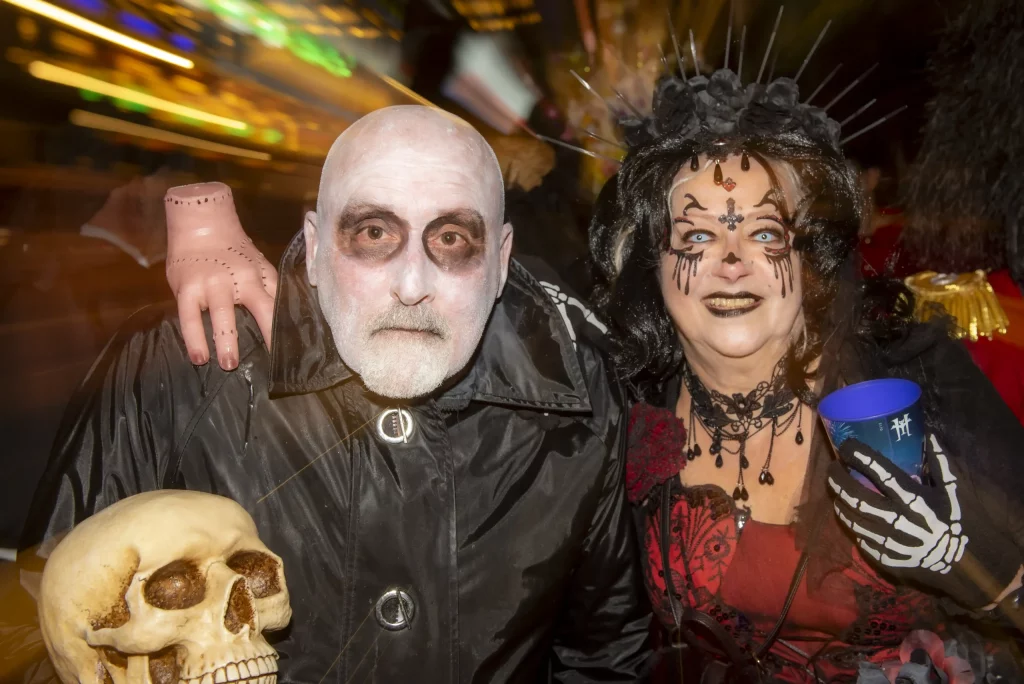
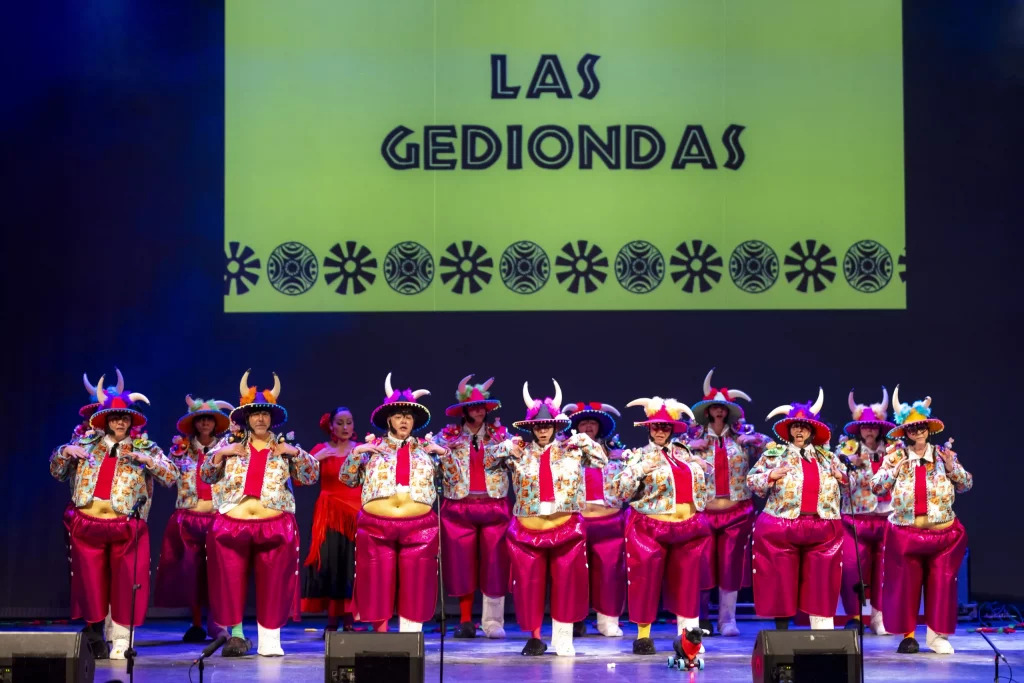
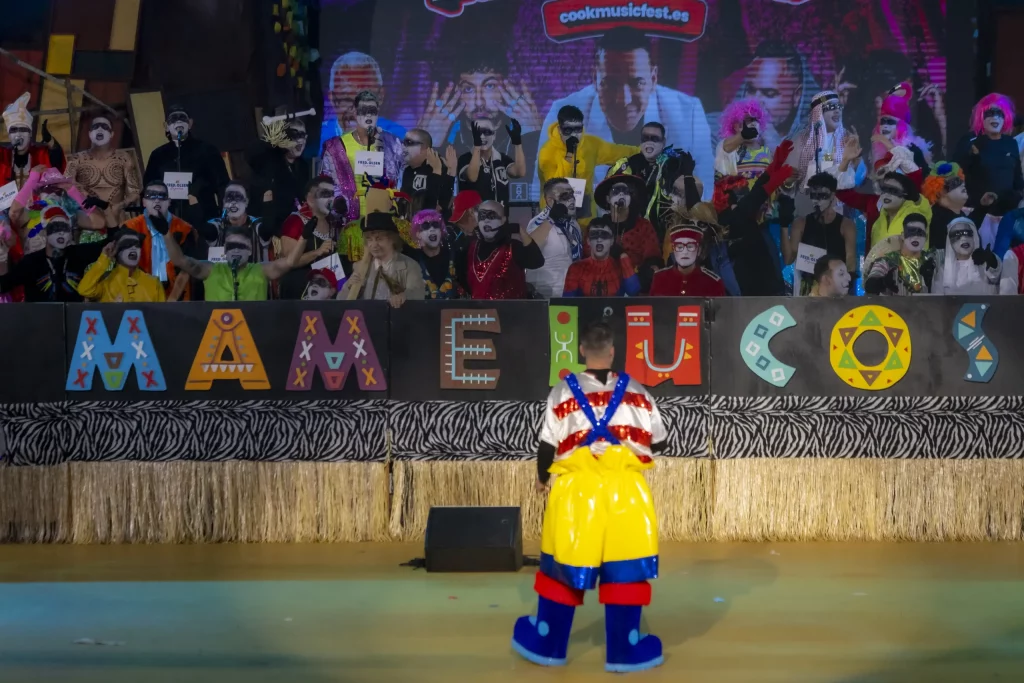
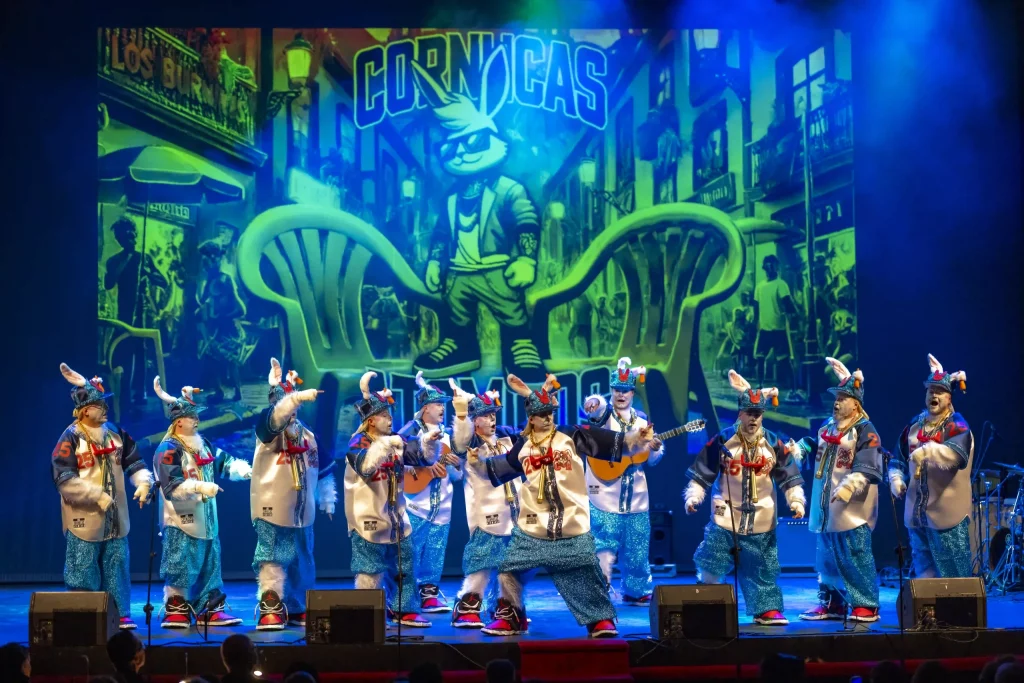
Murgas are satirical singing groups of about 40 people who spend all year crafting biting social commentary set to music. They sing with distinctive kazoo-like whistles and percussion, roasting politicians, scandals, and society. The lyrics are sharp, often hilarious, always pointed. Groups represent specific neighborhoods, and their rivalry during competitions generates genuine local passion. Even if you don’t speak Spanish, watching a murga performance at a street corner while confused locals around you crack up is a memorable experience. The granddaddy of all murgas is Afilarmónica NiFú-NiFá—they still perform, and catching them is a highlight.
Comparsas are the dance troupes channeling Brazilian carnival energy. Think synchronized choreography, batucada drumming, and costumes dripping with feathers and sequins. These groups bring the samba-style spectacle to parades and compete in their own contest on February 7. When a comparsa passes you during a parade, the bass from their drum sections literally vibrates your chest.
The dynamic tension between murgas (satirical, verbal, traditionally Spanish) and comparsas (rhythmic, physical, Latin American influence) creates carnival’s unique flavor. You’re not just watching one thing—you’re watching two different cultural traditions duke it out for attention.
📹 Must-Watch Videos:
- Tenerife Carnival Queen Gala highlights – Search for the latest gala to see those massive costumes in action
- Murgas NiFú-NiFá performance – Watch the granddaddy of all murgas
- Coso Apoteosis parade – The main parade in all its glory

Realistic Budget for a 4-Day Carnival Experience 💵
You can absolutely do this on a shoestring.
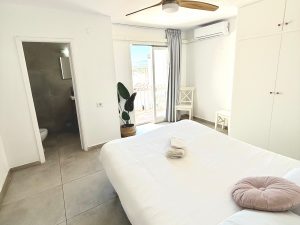
Accommodation: At Nests Hostels, dorm beds start at €12-28/night in our Tenerife locations. With Nest Pass, lock in 20% off for weekly stays or 30% off for monthly stays—way better than carnival-inflated prices elsewhere. Aguere Nest Hostel in La Laguna and Puerto Nest Hostel are your best bets for easy carnival access.
But as mentioned before, the whole island of Tenerife, as well as the nearby islands, will be celebrating Carnival, so it will be accessible from everywhere — including all our Nests Hostels in Tenerife and Gran Canaria.
Food and drink: Street snacks are €1-3. A “menú del día” (lunch special) runs €7-12 and feeds you properly. Local beers—Dorada and Tropical—cost €2/pint at most places. A shot is €3. There are also several minimarkets in the area.
If you find a “guachinche” (traditional family restaurant), you’ll get a full meal for €10-15.
Pro tip: don’t eat at tourist-facing restaurants on the parade route—prices spike.
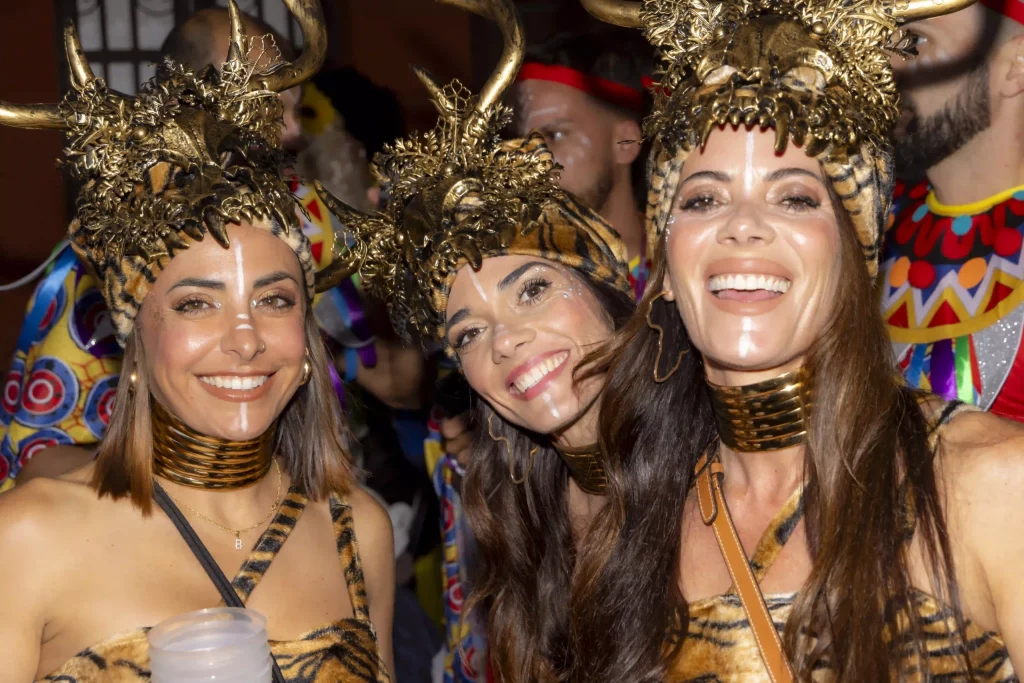
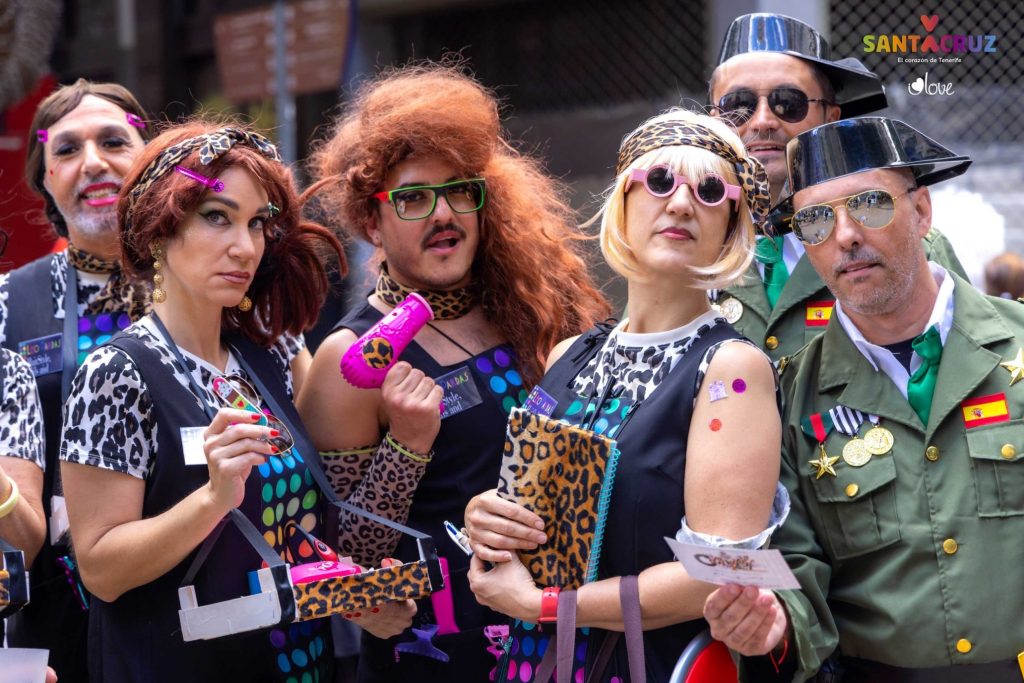
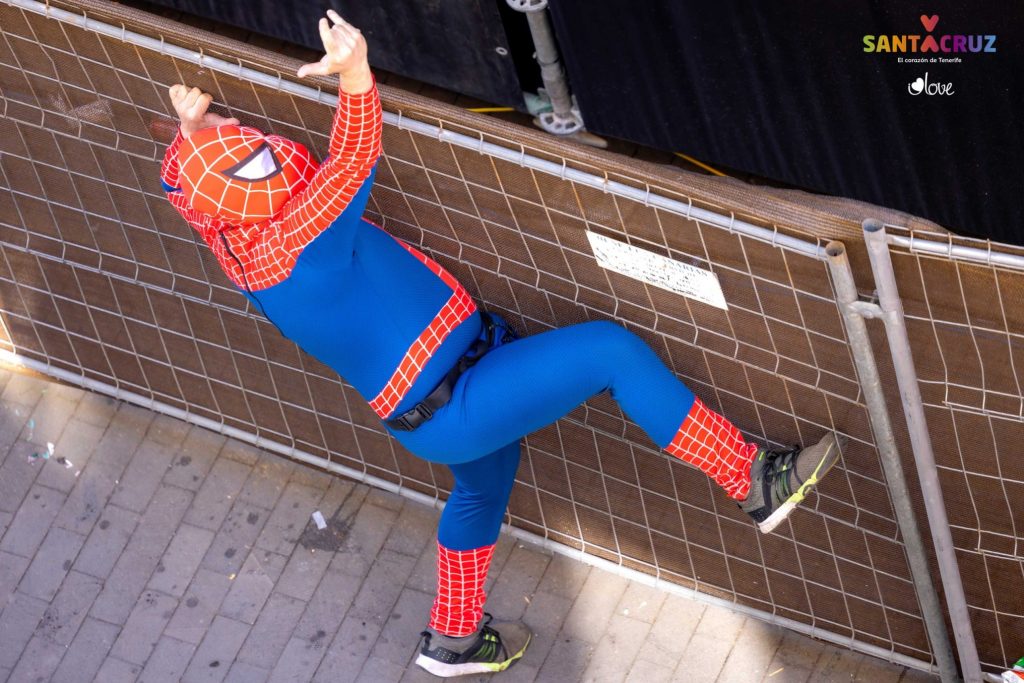
Costumes: This is non-negotiable. You WILL feel awkward without one—nearly everyone participates. Chinese bazaars and supermarkets sell basic costumes for €15-25. A wig, mask, or accessory set costs €5-10 if you’re going minimal. The Casa del Carnaval museum shop sells costumes too. Street stalls pop up everywhere during carnival weeks. Or DIY it: pack a feather boa, face paint, and a ridiculous hat from home. 🎭

The Ticket Situation (Most Events Are Free) 💰
Here’s what nobody tells you upfront: the best parts of Tenerife Carnival cost nothing.
All street parties free. Opening Parade free. The Coso Apoteosis main parade free (to stand and watch). Daytime carnivals free. Burial of the Sardine free. Every night of Carnaval de Noche when you’re dancing in Plaza de España until 5 AM—completely free.
The ticketed events are the galas and contests held at the Recinto Ferial (the massive trade fair center designed by Santiago Calatrava). Queen Election Gala, Murgas Finals, Comparsas Contest, Drag Gala—these typically run €5-15 each. Sounds cheap until you learn tickets sell out within an hour of release. In 2025, all 20,000 seats vanished in under 60 minutes.
💡 Pro Tip:
Reserved parade seating runs €40-65 if you want guaranteed views, but honestly, finding a spot on the route early is free and often better for atmosphere.



Southern Tenerife Alternative: Los Cristianos Carnival
If you’re based in the south and can’t make Santa Cruz, or want to extend your carnival experience, Los Cristianos International Carnival runs March 5-16, 2026 with a space theme (“We’re heading straight to space!”). This is smaller—around 125,000 total attendees—but still substantial. The Gran Coso parade on March 15 rolls down the famous “Golden Mile” (Avenida de Las Américas) past the Hard Rock Cafe.
The timing works perfectly: hit Santa Cruz for the main event (ending February 22), stick around the island, then catch Los Cristianos starting March 5. Double carnival trip. 🚀
Puerto de la Cruz also runs its own carnival concurrently with Santa Cruz (February 1-28), though smaller. If you’re staying at Puerto Nest, you can experience both carnivals easily!
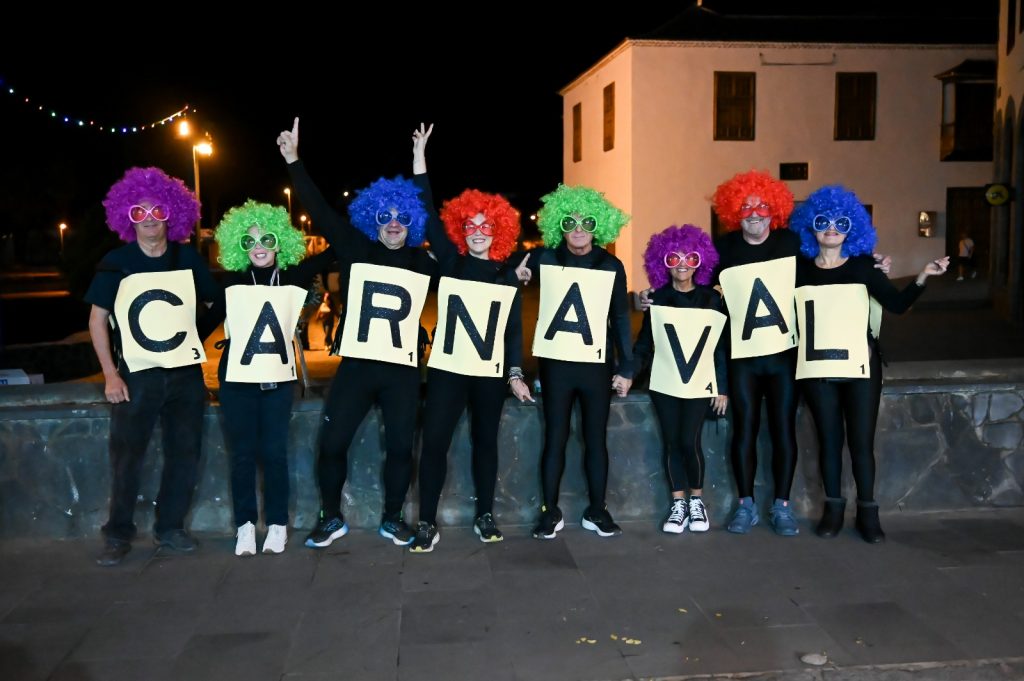

Instagram-Worthy Moments and Where to Find Them 📸
The Queen Election Gala costumes are genuinely jaw-dropping. These aren’t costumes—they’re mobile architectural installations that require engineering degrees to construct. At 80-170 kg and up to 5 meters tall, they’re unlike anything you’ve seen. Getting into the gala requires tickets, but broadcast footage and photos flood social media immediately after.
For parade photography, the Coso Apoteosis (February 17) delivers maximum color—arrive by early afternoon to stake out a spot on Avenida de Anaga with good sightlines. Daytime carnivals (February 15 and 21) offer better natural lighting for photos than the night street parties.
Official hashtags: #RitmosLatinos, #CarnavalSC26, #CarnavalDeTenerife, #YoSoyCarnaval. Follow @carnavaldetenerife and @nestshostels for real-time updates and to share your carnival adventures!
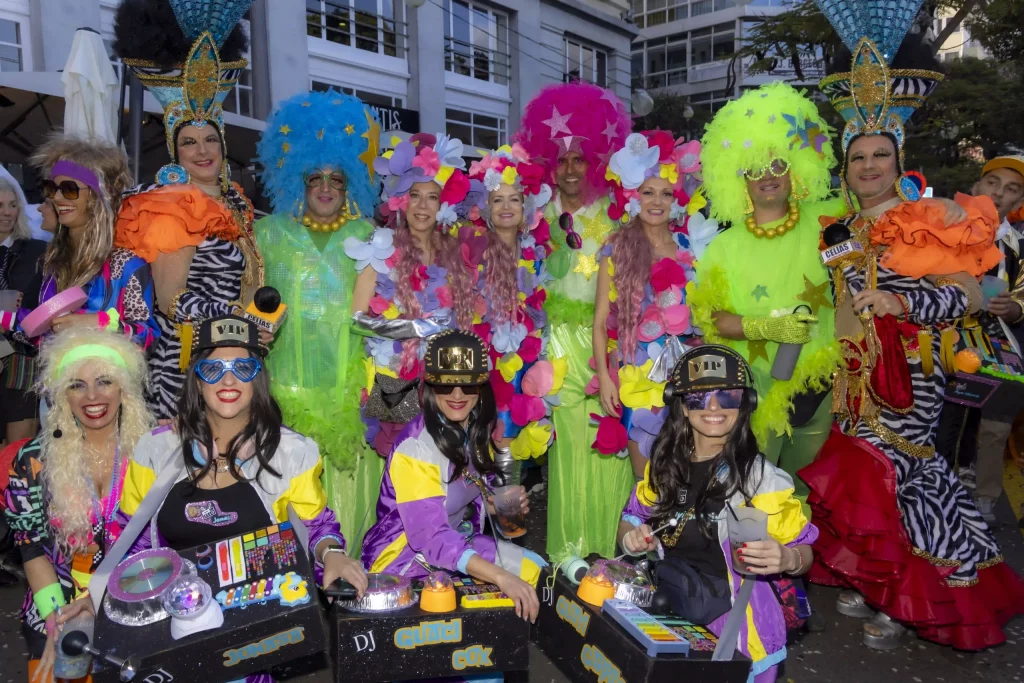
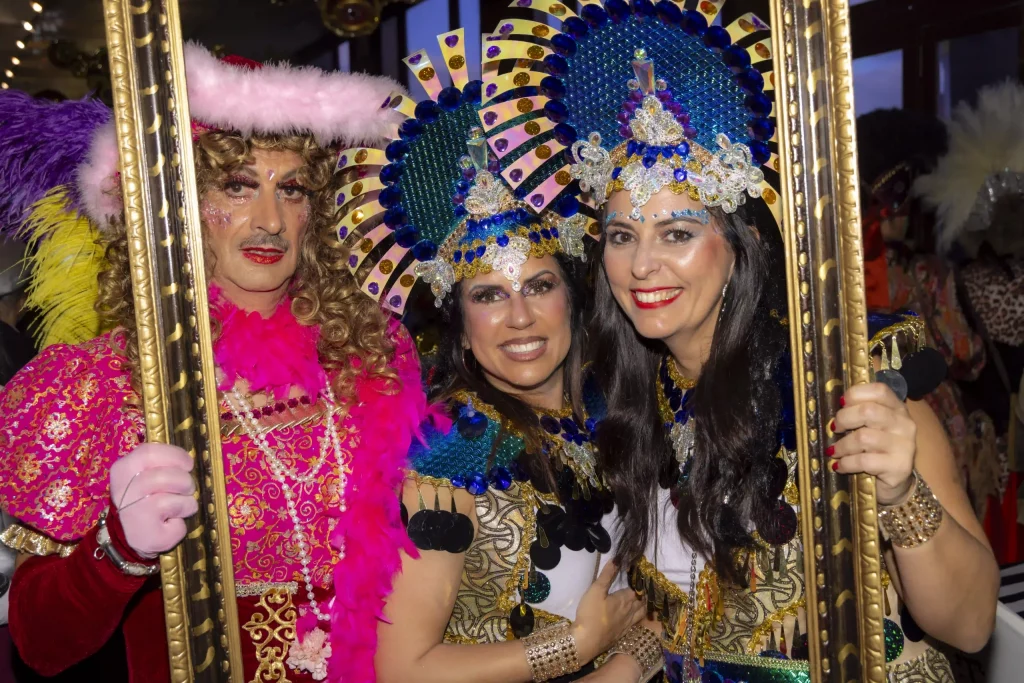
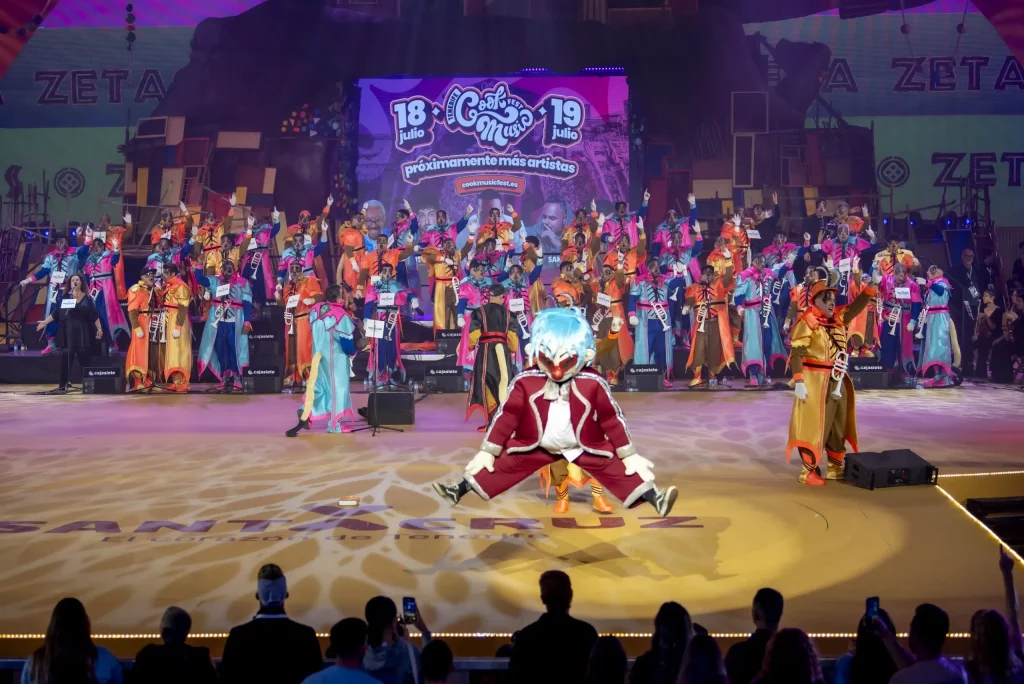
The One Thing That Makes Tenerife Different from Rio 🌟
Rio is spectacle at scale—stadium seating, samba schools as competitive teams, and a price tag to match. Tenerife is grassroots chaos in the best way. The cost barrier is almost nonexistent. Participation isn’t just welcomed—it’s expected. The murgas tradition injects genuine social commentary and local humor into what could otherwise be pure hedonism.
When Franco banned carnival from 1937-1977, Tenerifeans kept celebrating anyway under the sanitized name “Winter Festivities.” This wasn’t something imposed by a tourism board. It survived dictatorship. That history matters.
The carnival twinned with Rio in 1984 specifically because of the parallel energy. But Tenerife gives you something Rio can’t: accessibility. You can show up as a backpacker, stay at Nests Hostels (even cheaper with Nest Pass), spend almost nothing, and leave having experienced one of Europe’s largest street parties from the inside, not the cheap seats.
Pack a costume. Memorize the phrase “¡Viva el Carnaval!” Book your bed at Nests Hostels now before carnival week fills up. And prepare to not sleep much between February 13-22. This is the real deal. 🎉
Ready to Experience Tenerife Carnival 2026?
Don’t let carnival week accommodations sell out. Book your stay at Nests Hostels and lock in our special Nest Pass rates before prices surge.
📋 What’s Inside This Guide
- What “Latin Rhythms” Actually Means – The 2026 theme, music styles, and what to expect from this year’s carnival vibe
- PHASE 1: Contest Season (January 16-31) – Murgas elimination rounds and adult finals for authentic local atmosphere
- PHASE 2: The Galas (February 2-11) – Children’s, Senior, and Queen galas with 80-170kg costumes broadcast nationally
- PHASE 3: Street Carnival Week (February 13-22) – Opening parade, Coso Apoteosis, drag gala, and nightly street parties
- 🐟 The Burial of the Sardine – Carnival’s wildest finale with mock funeral, men in drag as widows, and burning sardine spectacle
- Getting There & Transportation – Bus routes from south/north Tenerife, 24-hour service during carnival weekends
- Where to Stay: Nests Hostels – Best locations in La Laguna and Puerto de la Cruz, plus group trips from all properties
- Save with Nest Pass – Lock in 20-30% discounts even during carnival peak pricing
- Where the Parties Happen – Plaza de España, Avenida Marítima, the Cuadrilátero party zone, and Recinto Ferial
- What to Expect at Carnaval de Noche – Night parties, safety tips, and the “vacilar” tradition
- How Murgas and Comparsas Work – Understanding the satirical singers vs. Brazilian-style dance troupes
- Realistic Budget for 4 Days – Accommodation, food, drinks, costumes, and ticketed events breakdown
- The Ticket Situation – Which events are free (most!) and how to snag tickets for the galas that sell out in minutes
- Los Cristianos Carnival (March 5-16) – Southern Tenerife alternative and how to do double carnival
- Instagram-Worthy Moments – Best photo spots, hashtags, and when to catch the Queen’s parade
- Why Tenerife Beats Rio – Grassroots accessibility, genuine participation, and backpacker-friendly pricing
This complete guide covers everything from the €5-15 ticketed galas to the 100% free street parties, budget accommodation at Nests Hostels, transportation hacks, and the bizarre traditions that make Tenerife Carnival Europe’s wildest party.
Fotos from 2025 and previous carnivals, source: https://carnavaldetenerife.com/
FAQ’s about Tenerife carnival 2026
The theme of the Tenerife Carnival 2026 is Ritmos Latinos (Latin Rhythms), a celebration inspired by the vibrant sounds of samba, salsa, merengue, bachata, and reggaeton across Latin America.
The Tenerife Carnival 2026 runs from January 16 through February 22, 2026 with three distinct phases: Contest Season (Jan 16-31) featuring murgas competitions, The Galas (Feb 2-11) including the spectacular Queen Election Gala on February 11, and Street Carnival Week (Feb 13-22) when the main parades and street parties happen!
Most events take place in Santa Cruz de Tenerife, the island’s capital. Many towns across Tenerife also organize their own carnival activities, including Puerto de la Cruz (running concurrently) and Los Cristianos (March 5-16, 2026).
From the south, TITSA bus routes 110 (express, ~55 min) and 111 (~75-90 min) run every 20-30 minutes during the day. Night service 711 runs hourly from 10 PM to 5:30 AM during carnival. Plus, you can stay at our Nests Hostels in the south (Duque Nest, Arena Nest, El Médano Nest, Las Eras Nest) and join our organized group trips to Santa Cruz!
Stay at our Nests Hostels across Tenerife! Aguere Nest in La Laguna is just 9-10 km from the carnival with a tram that runs 24 hours during carnival weekends. We also have Puerto Nest, El Médano Nest, Duque Nest, Arena Nest, Las Eras Nest, Los Amigos Nest, and Ashavana Nest – all organizing group trips to Santa Cruz during carnival week! With Nest Pass, you can switch between hostels and explore different areas of the island.
Don’t miss these highlights:
Gran Gala de Elección de la Reina (Queen Election Gala) – February 11
Cabalgata Anunciadora (Opening Parade) – February 13
Coso Apoteosis (Main Parade) – February 17
Entierro de la Sardina (Burial of the Sardine) – February 18
Carnaval de Día (Daytime Carnival) – February 15 & 21
Gala Dragnaval – February 16
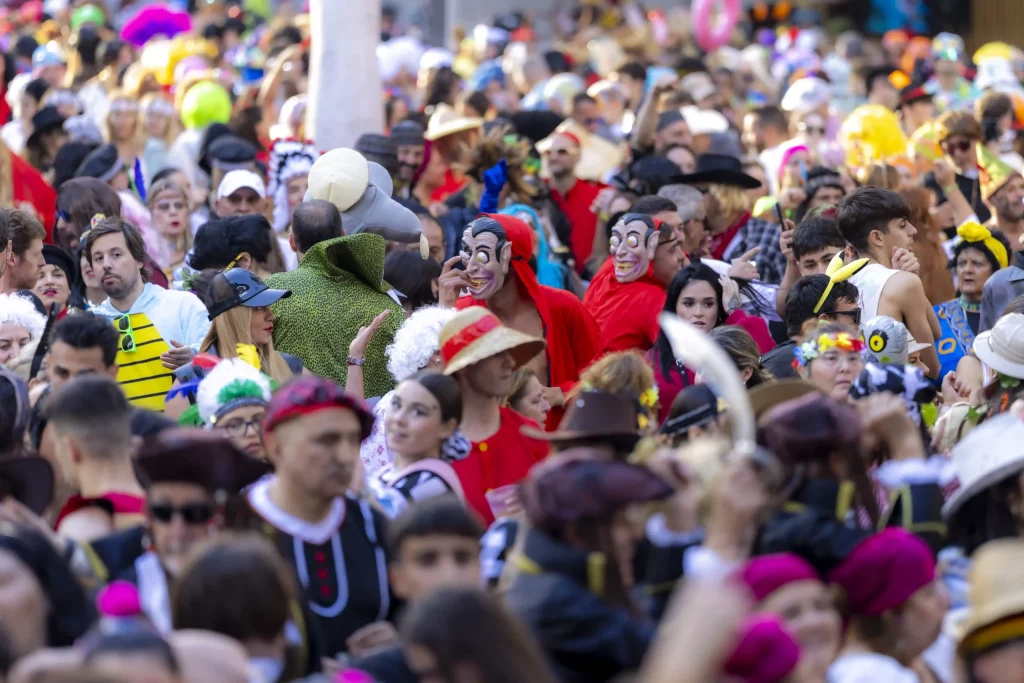
It’s not mandatory, but 999 out of 1,000 people wear costumes – you’ll definitely feel awkward without one! A colorful costume is the best way to dive into the carnival spirit. Basic costumes cost €15-25 at local shops, or you can DIY it with a feather boa and face paint from home.
Beyond carnival, enjoy a Surf Camp at Nests Hostels, hike Teide National Park, explore northern beaches, discover charming villages, or join our other island activities. Join our WhatsApp group at check-in to stay connected with the Nests Community and find out about group excursions!
Anything goes! The more creative and colorful, the better. Most people wear full costumes, but you can also go with themed accessories like wigs, masks, or face paint. Wear comfortable shoes – you’ll be dancing and walking for hours. For the Burial of the Sardine on February 18, wear black to join the mock funeral procession!
You’ve got plenty of options! Chinese bazaars and supermarkets sell basic costumes for €15-25. The Casa del Carnaval museum shop has official carnival merchandise. Street stalls pop up everywhere during carnival weeks. Or bring supplies from home and DIY it – feather boas, face paint, and a ridiculous hat go a long way!
Absolutely! Despite crowds of 200,000+ people, carnival is remarkably safe with heavy police presence, medical posts throughout the carnival area, and a dedicated carnival hospital. Your main concerns are pickpockets (use a secure crossbody bag) and staying hydrated. The atmosphere is welcoming and friendly – solo travelers easily meet people and join the party!
YES! Book as early as possible – accommodation fills up fast and prices can triple during carnival dates. That’s why Nest Pass is so valuable: it locks in 20% off weekly stays and 30% off monthly stays even during peak carnival pricing. While others pay inflated rates, you’ll enjoy regular prices at any of our Nests Hostels locations!
It’s carnival’s wildest finale! On February 18, thousands of people (traditionally men in drag) dress as grieving widows in black and follow a giant papier-mâché sardine through the streets in a mock funeral procession. The sardine is then set on fire on Avenida Marítima, symbolizing the death of carnival and the purging of excesses before Lent. It’s theatrical, absurd, and absolutely unforgettable!
Murgas are satirical singing groups (~40 people) who roast politicians and society with sharp humor, kazoo-like whistles, and percussion. They represent specific neighborhoods and compete intensely. Comparsas are Brazilian-style dance troupes with synchronized choreography, batucada drumming, and elaborate feathered costumes. Together, they create carnival’s unique tension between Spanish satire and Latin American spectacle!
The Gran Gala de Elección de la Reina (Queen Election Gala) takes place on Tuesday, February 11, 2026 at the Recinto Ferial. Candidates parade in costumes weighing 80-170 kg and reaching 5+ meters tall! Tickets (€5-15) sell out within an hour of release – follow @carnavaldetenerife on Instagram for ticket announcements. The gala broadcasts nationally across Spain.
Absolutely! Our Nest Pass locks in the same price even during carnival peak dates – while other accommodations triple their rates! Get 20% off for weekly stays and 30% off for monthly stays. Dorm beds at Nests Hostels start at €12-28/night. Book early to secure your spot and beat the carnival price surge!
Nest Pass gives you 20% off weekly stays and 30% off monthly stays at any of our Tenerife locations, including during carnival week when prices elsewhere skyrocket. You get flexibility to switch between hostels, access to our organized group trips to Santa Cruz carnival, and you’ll stay connected through our WhatsApp community to meet fellow travelers and join activities!
Yes! TITSA adds over 4,200 extra journeys during carnival. The Santa Cruz bus interchange operates 24 hours on Fridays, Saturdays, and Carnival Monday (other nights until 3 AM). Night bus 711 runs hourly from 10 PM to 5:30 AM from the south. Most importantly, the Tram Line 1 from La Laguna runs 24 hours on carnival weekends – perfect if you’re staying at Aguere Nest!